

Hydraulic Press: The Innovation Journey and Future Prospects of an Industrial Giant
Hydraulic Press: A Comprehensive Overview
The hydraulic press, a vital equipment extensively used in industrial sectors, employs liquid as its working medium to transmit energy based on Pascal's Law, thereby accomplishing various technological operations. This article provides a comprehensive introduction to the hydraulic press, covering its historical development, working principle, structural composition, classification, application areas, technological innovations, and future trends.
I. Historical Development of Hydraulic Press
The history of the hydraulic press can be traced back to the late 18th and early 19th centuries. In 1795, Joseph Braman, a British engineer, invented the world's first water press in London, marking the birth of hydraulic transmission technology. With the advancement of the Industrial Revolution, hydraulic technology gradually evolved and improved. In 1905, the working medium was changed from water to oil, further enhancing the performance of hydraulic presses. After World War I, hydraulic transmission technology gained widespread application, and particularly after 1920, the industrial production of hydraulic components laid a solid foundation for the development of hydraulic presses.
In the 20th century, hydraulic press technology continued to advance, with significant achievements in countries like Japan. In 1925, Vickers invented the pressure-balanced vane pump, laying the groundwork for the development of modern hydraulic component industries. Over the subsequent decades, hydraulic presses underwent continuous innovation in structural design, control systems, material selection, resulting in superior performance and broader application areas.
II. Working Principle of Hydraulic Press
The working principle of the hydraulic press is based on Pascal's Law, which states that pressure exerted on a confined liquid is transmitted equally in all directions. The hydraulic press uses a hydraulic pump to pump liquid (usually oil) into the main cylinder, generating pressure. Subsequently, the pressure is transmitted through pipelines to the slave cylinder. Since the piston area of the slave cylinder is generally larger than that of the main cylinder, according to the principle of the lever, the slave cylinder generates greater force. This force is transmitted to the working components (such as molds, workpieces, etc.) through the piston, thereby achieving various technological operations.

The actuating elements of the hydraulic press mainly include the hydraulic cylinder and piston. The hydraulic cylinder is a sealed cylinder filled with liquid, and the piston moves reciprocally within the cylinder. When the hydraulic pump pumps liquid into the hydraulic cylinder, the liquid generates pressure within the cylinder, driving the piston to move. By adjusting the output pressure and flow rate of the hydraulic pump, the motion speed and force of the piston can be controlled, enabling precise technological control.
III. Structural Composition of Hydraulic Press
A hydraulic press generally consists of three main parts: the main machine (host), the power system, and the hydraulic control system. The main machine primarily includes structural components such as the frame, hydraulic cylinder, and worktable. The power system comprises the hydraulic pump, electric motor, and other power sources. The hydraulic control system is responsible for controlling the flow and pressure of the liquid, enabling precise operation of the hydraulic press.
Frame: The frame is the main structure of the hydraulic press, used to support and fix components such as the hydraulic cylinder and worktable. The design of the frame should meet the requirements of strength and stiffness to ensure stability and reliability during the operation of the hydraulic press.
Hydraulic Cylinder: The hydraulic cylinder is a crucial component of the hydraulic press, used to generate force and motion. It typically consists of a cylinder block, piston, sealing elements, etc., which move through the pressure of the liquid.
Worktable: The worktable is used for installing molds and workpieces, serving as the primary workspace for technological operations of the hydraulic press. The design of the worktable should meet technological requirements, facilitating the installation of molds and the placement and removal of workpieces.
Hydraulic Pump: The hydraulic pump is the power source of the hydraulic press, responsible for pumping liquid into the hydraulic cylinder to generate pressure. The performance of the hydraulic pump directly affects the output force and working efficiency of the hydraulic press.
Control System: The control system is used to control the flow and pressure of the liquid, enabling precise operation of the hydraulic press. It typically includes components such as hydraulic valves, control panels, sensors, etc. Through reasonable system design and control strategies, it ensures that the hydraulic press can operate according to predetermined technological requirements.
IV. Classification of Hydraulic Press
Hydraulic presses can be classified into various types based on different classification criteria, including the type of liquid used for transmitting pressure, structural form, and direction of applied force.
Classification by Type of Liquid:
Oil Press: A hydraulic press using oil as the working medium is called an oil press. Oil presses have the advantages of high working pressure, stable transmission, and easy control, making them widely used in various technological fields.
Water Press: A hydraulic press using water as the working medium is called a water press. Water presses have the advantages of low cost and no pollution, but they are inferior to oil presses in terms of working pressure and transmission efficiency.
Classification by Structural Form:
Vertical Hydraulic Press: Most hydraulic presses have a vertical structure, offering advantages such as small floor space and convenient operation. Vertical hydraulic presses are widely used in metal forming, powder metallurgy, and other fields.
Horizontal Hydraulic Press: Horizontal hydraulic presses are mainly used in processes such as extrusion and straightening. They have a compact structure and good stiffness, making them suitable for processing large workpieces.
Four-Column Hydraulic Press: Four-column hydraulic presses have the advantages of stable structure and uniform pressure distribution, making them widely used in precision tool processing.

Single-Column Hydraulic Press: Also known as a C-frame hydraulic press, it has the advantages of small size and flexible operation, making it suitable for processing small and medium-sized equipment.
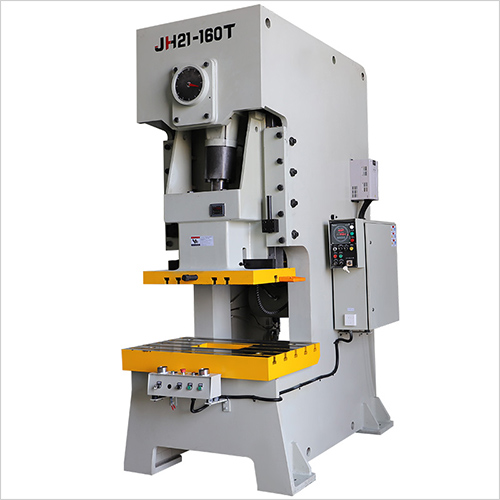
Gantry-Type Hydraulic Press: Gantry-type hydraulic presses adopt a fully steel gantry structure, offering high stiffness and precision, making them suitable for processing large workpieces.

Classification by Direction of Applied Force:
Single-Action Hydraulic Press: A single-action hydraulic press can only generate force in one direction, making it suitable for simple technological operations.
Double-Action Hydraulic Press: A double-action hydraulic press can generate force in two directions, making it suitable for technological fields requiring bidirectional processing.
V. Application Areas of Hydraulic Press
Hydraulic presses are widely used in various fields due to their powerful pressure transmission capabilities and precise control performance. The following are some major application areas:
Metal Forming and Cutting: Hydraulic presses play a crucial role in metal sheet stamping and deep drawing processes, primarily used in the automotive and home appliance industries for metal cover part forming. Additionally, hydraulic presses are used for pressure forming of metal mechanical parts, including die pressing, extrusion forming of metal profiles, cold and hot die forging, free forging, and other processing techniques.

Powder Products Industry: Hydraulic presses are also widely used in the powder products industry, such as the pressing and forming of magnetic materials and powder metallurgy products.

Press Forming of Non-Metallic Materials: Hydraulic presses are suitable for press forming of non-metallic materials, such as SMC molding, hot pressing of automotive interior parts, and rubber products.

Hot Press Forming of Wood Products: Hydraulic presses are also used in the wood processing industry, such as hot pressing of plant fiber boards and profiles.

Other Applications: Hydraulic presses are also used in processes such as pressing and fitting, correction, plastic sealing, and printing. They play an important role in the internal high-pressure forming and sheet hydroforming of automotive tubes and sheets.

VI. Technological Innovations and Future Trends of Hydraulic Press
With the continuous advancement of technology and industrial production, hydraulic press technology is also undergoing constant innovation. Digitalization, intelligence, and automation have become the main directions of hydraulic press technology development.
Digital Technology: The application of digital technology has led to significant improvements in the control precision, operational convenience, and energy efficiency of hydraulic presses. By integrating various sensors, PLC control systems, and human-machine interaction interfaces, the level of intelligence in hydraulic press production has continuously increased, providing users with a more convenient and efficient production experience.
Intelligence Trend: In the future, hydraulic presses will focus more on intelligent development. By introducing advanced technologies such as artificial intelligence and big data, hydraulic presses will be able to achieve more precise technological control and fault prediction, improving production efficiency and product quality.
Environmental Protection Trend: With the increasing awareness of environmental protection, hydraulic presses will also place greater emphasis on environmental protection during manufacturing and usage. Measures such as adopting environmentally friendly materials, optimizing hydraulic system design, and reducing energy consumption will become important directions for the development of hydraulic press technology.
Efficiency Trend: Efficiency is another important direction for the development of hydraulic press technology. By optimizing the design of the hydraulic system, improving the performance of hydraulic pumps and cylinders, and adopting advanced control strategies, hydraulic presses will be able to achieve higher working efficiency and lower energy consumption.
VII. Conclusion
The hydraulic press, as an important industrial equipment, plays a significant role in metal forming, powder metallurgy, non-metallic material processing, and other fields. With the continuous advancement of technology and industrial production, hydraulic press technology is also undergoing constant innovation and improvement. In the future, hydraulic presses will focus more on digitalization, intelligence, automation, and environmental protection trends, bringing more efficient and precise manufacturing solutions to industrial production. At the same time, with the continuous emergence of new materials and processes, the application areas of hydraulic presses will also continue to expand and deepen.
form
NAME:*
TEL:*
E-MAIL:*
NOTES:
Verification code